.png)


Music Therapy and Anxiety: Exploring the Connection Between Music and Emotions
- 2 days ago
- 4 min read
Music has always had a strong association with human emotions. A certain song can remind us of a specific event, make us feel happy and relaxed, or help us cope with emotional difficulties. Because of this strong emotional connection, there is an increasing interest in using music as a supportive approach to managing stress, anxiety, and other emotional challenges. Music therapy for anxiety and depression is one such approach that uses the therapeutic qualities of music to support emotional well-being and improve coping skills.
For practitioners like Santosh Ghatpande, understanding the connection between music and emotions can provide valuable insights into how creativity can be incorporated into mental health improvement techniques. By thoughtfully using music, practitioners can create supportive environments that encourage relaxation, emotional expression, self-awareness, and positive psychological well-being.
What Is Music Therapy?
Music therapy is a practice that uses music-based activities to support physical, cognitive, social, emotional, and psychological well-being. These activities may include listening to music, singing, making music, playing instruments, writing song lyrics, working with rhythms, and discussing emotions connected to specific pieces of music. Music therapy for anxiety and depression can provide individuals with a creative and supportive way to explore their emotions and develop healthier coping strategies.
Unlike simply listening to music for pleasure, music therapy involves structured activities guided by a trained music therapist. The therapist selects appropriate techniques based on an individual's emotional and psychological needs.
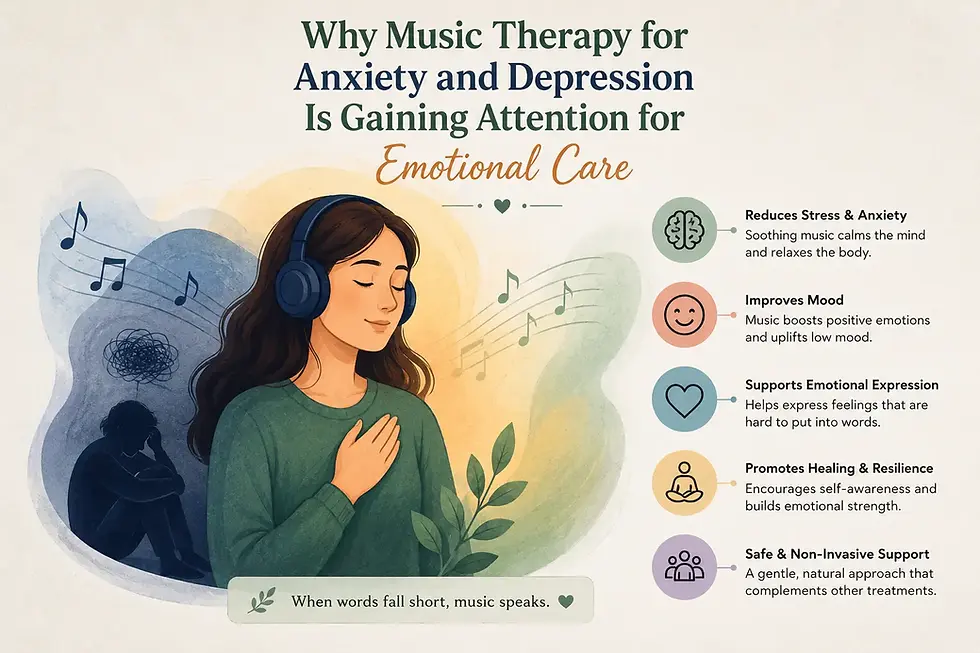
The purpose of music therapy for anxiety and depression is to encourage emotional expression, develop effective coping mechanisms, provide emotional relief, reduce psychological distress, and support overall mental health and well-being.
Why Does Music Influence Our Emotions?
Music can affect the way of emotion processing and experiencing because the rhythm, tempo, melody, lyrics, and even association with a certain song can affect our emotional condition.
The calming effect will be provided by a slow rhythmical melody, while high-energy music can make people feel inspired and uplifted.
Moreover, the familiar songs can create associations and help with creating emotions as well.
Music Therapy for Anxiety and Depression
The concept of using music therapy to treat anxiety and depression means utilizing activities involving music to assist people to cope with emotional issues. Anxious people are often characterized by constant fears, nervousness, being uneasy or restless and difficulties in relaxing. Depression cases are accompanied by lack of interest in life and being pessimistic and lazy, and feeling isolated.
These activities may be helpful in giving time to relax, pay attention to what happens and express emotions or have an experience of one’s choice. In addition, music-related exercises may serve as an effective means to start a dialogue in case it is problematic to do so.
It is necessary to mention that music therapy cannot be viewed as an obligatory substitute for conventional treatment of any kind.
Benefits of Music-Based Emotional Support
There may be various advantages of incorporating music therapy in a suitable wellness/therapeutic approach.
1. Promotes Relaxation
Music as well as various guided musical exercises can help foster a more relaxed setting. Concentrating on sound and rhythm will also enable a person to have a temporary distraction from obsessive or negative thinking.
2. Facilitates Emotional Exploration
It is not always possible for someone to explain in words the emotions he or she feels. In this case music can serve as an alternative tool for exploration or expression of one's emotions.
3. Helps Foster Mindfulness
Various elements of music – from rhythm to lyrics can direct the mind towards the present moment and distract a person from negative thoughts.
4. Facilitates Communication and Connection
Participation in various group musical exercises such as singing or playing together can help in communication as well as foster connections with other individuals.
5. Helps Create Positive Experience
Listening to music and participating in various musical activities is a great way of creating positive experience. It is important for those who suffer from emotional problems and distress.
Choosing the Right Music
No specific kind of music is suitable for all people as each one may be influenced differently by music based on personal choices and associations.
To relax, one may enjoy light instrumental music, nature-related sounds, slow tunes, as well as songs that may evoke good memories associated with those pieces. Whatever music a person chooses, it matters most what effect he/she gets from it.
Making Music Part of Your Well-being Routine
Listening to music may also become a part of your daily self-care. One may prepare a relaxing playlist of favorite music or even engage in playing an instrument or singing while listening attentively to music.
If there persist any signs of excessive worry, depression, and mood swings, one should see a relevantly certified health practitioner.
Conclusion
Relationships between music and emotions are highly personalized and potent. In order to achieve relaxation, expression, connection, and even healing through purposeful tasks and interventions, music therapy can help in some ways.
It is an example of how creative interventions can be useful for dealing with issues like anxiety and depression along with general mental well-being practices. There are numerous specialists in the field like Santosh Ghatpande who work on such themes.


Comments