.png)


7 Ways Music Therapy for Stress Relief Can Support a Calmer Mind
- 7 days ago
- 4 min read
The experience of stress has become a normal part of modern life. The demands of work, the pressures from personal life, technology, and even other daily stresses can make the mind feel fatigued and stressed. Although there are various relaxation exercises, music can provide a convenient and pleasant way to relax.
The use of music therapy for stress reduction is based on the use of music in a thoughtful and purposeful manner in order to promote relaxation and well-being. At Santosh Ghatpande, music-related techniques can be used by individuals for exploring how sound and rhythm can help them relax.
Seven ways that music therapy can help reduce stress and promote mental relaxation.
1. Helps Slow Down a Busy Mind
When a person is stressed, their mind might get into repetitive patterns and become uncontrollable. Listening to soothing music will give the mind some kind of distraction from negative patterns.
Gentle tunes, soothing instrumental sounds, or music that a person is familiar with can help a person pay more attention to the present moment.
Instead of constant worries, a person will focus on the rhythm of the music, its melody, or changes in the sound.
It will help to distract the mind from everyday troubles and relax.
2. Encourages Relaxation Using Rhythm
The rhythm is one of the key elements of music therapy. Slow and even rhythms can cause slow breathing and a more relaxed attitude.
Music can be used together with slow breathing or other relaxing exercises to create an engaging process for a person.
In the end, all of these activities can become a routine for a person when he/she is experiencing stressful moments.
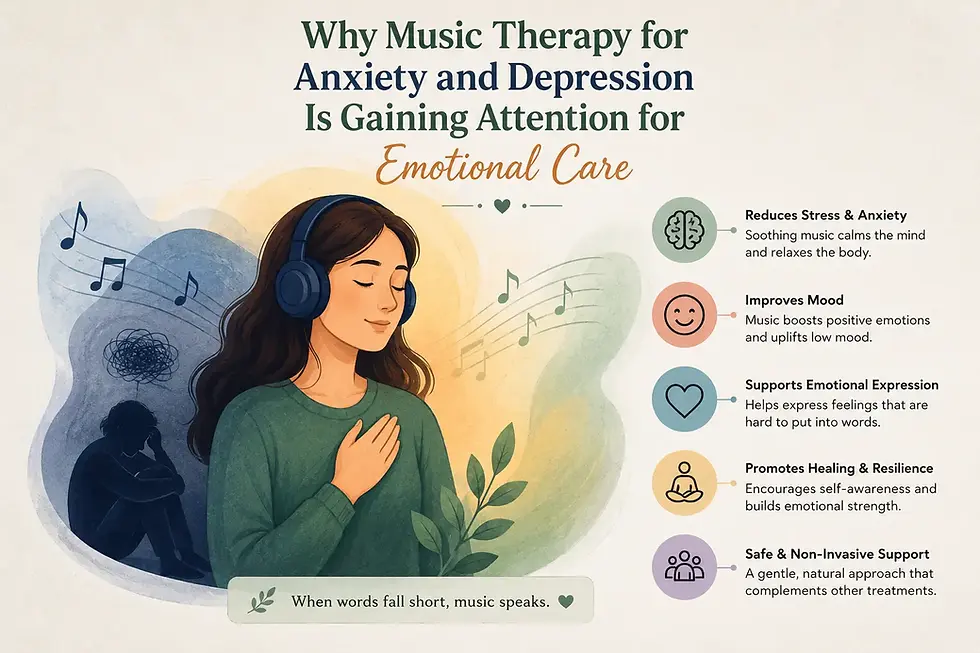
3. Supports Emotional Expression
Sometimes it is difficult to describe stress in words. In cases like these, it is possible that the emotions of frustration, sorrow, fear, or loneliness do not find their proper expression.
Music may become another way of getting in touch with one's emotions. Listening to the songs that have some meaning, playing a musical instrument, singing, and creating music may help people identify and articulate their emotions.
It could be useful to know that the acknowledgment of emotions is often a prerequisite to dealing with them in a more healthy way.
4. Can Improve Mood
Music is capable of affecting moods and providing positive emotional experience. One song can give energy to a person, while another one can create a feeling of peace.
In music therapy as a tool for stress reduction, music could be chosen in accordance with personal needs and preferences of each individual. It is not enough just to listen to music, it should be used on purpose for relaxation.
Inclusion of pleasant music in everyday life may help to create a positive mood during a hard day.
5. May Support Better Sleep Routines
Sometimes, stress and an active mind might prevent someone from relaxing before going to bed. Having a calming environment before sleep may contribute to the transition of body and mind from the daytime activity to sleep.
Listening to soft music at a pleasant volume may become one of the steps of the bedtime routine. The use of music that will not distract the mind, but will help to calm it down and relax.
The use of music as an element of the bedtime routine is recommended only as support for dealing with sleep disorders and not as an alternative for professional assistance if needed.
6. Helps to Practice Mindful Listening
Mindfulness means being aware of the present moment and avoiding the fixation on thoughts regarding the past or the future. Music may be very helpful in mindfulness because it gives the listener something to concentrate on.
The person during mindful listening is aware of the instruments, rhythm, volume, pitch, and other features of the music. Just a few quiet minutes of listening may serve as a break from mental activity.
This technique is especially suitable for those who do not find meditation techniques very useful.
7. Creates a Personal Relaxation Practice
Another major benefit of music is its accessibility. People can listen to music during their breaks from work, travel, do some breathing exercises, or prepare to go to bed.
Following the tips of experts such as Santosh Ghatpande, people can choose music exercises which are in line with their interests and daily schedule.
The key is regularity. A brief music exercise may prove easier to adhere to than an intricate relaxation technique.
Introducing Music as an Element of Stress Relaxation Techniques
There is no universally suitable genre of music. Personal preference, memories, cultural background, emotions, and individual reaction play roles in making music enjoyable or not.
First of all, select the music you like. Then, find a silent spot, remove distractions, and concentrate on the music for several minutes. One can use this time to do some breathing exercises, light stretches, or practice mindfulness.
In case of constant stress and its impact on everyday activities, music relaxation should serve as an additional method.
Find a Calmer Connection Through Music
Music need not only be entertainment. When approached consciously, it can help create an avenue for relaxation, expression of emotions, mindfulness, and good experience.
Stress reduction music therapy provides an easy way to discover how music and emotional health can relate. Through the process of intentional listening and practice, music can prove useful in a balanced approach to everyday stress management.
Under proper guidance, Santosh Ghatpande can assist individuals in discovering how practices involving music can help maintain a calm and conscious life.


Comments