.png)


Music Therapy for Stress Relief – Natural Ways to Relax and Heal
- Apr 28
- 4 min read
Stress in contemporary times is inevitable, especially with the kind of pace our lives have taken on account of work, among other factors. Stress is something that impacts our mental and even physical state of being, which is why there is a need to seek solutions. Music therapy for stress relief is becoming a popular choice because of its scientific nature and global practice.
Under expert guidance from professionals like Santosh Ghatpande, people are learning just how music therapy can help deal with stress effectively.
What is Music Therapy?
Music therapy is a form of therapy that uses music for the purpose of improving one’s mental, physical, and even psychological state. This form of therapy entails listening to, performing, or engaging in music with help from professionals trained in this area.
Contrary to just listening to music, music therapy for stress relief is more structured and personalised.
How Music Therapy Helps in Stress Relief
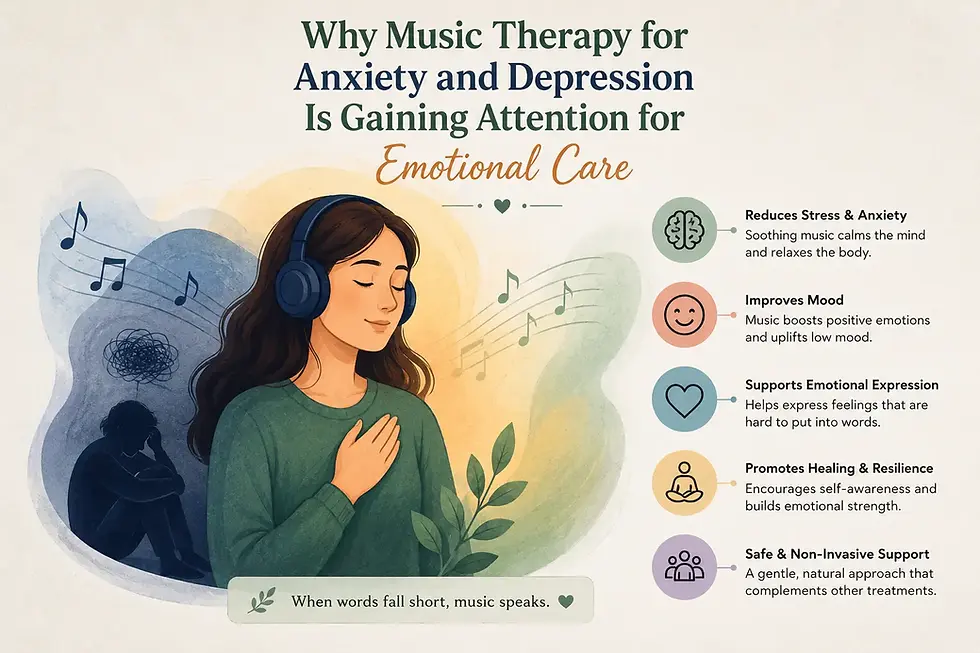
Music affects the brain and the nervous system. In this case, music as a treatment mechanism may be used to:
1. Lower Cortisol Levels
Music with a calming effect lowers the hormone that is produced by the body during stress conditions. This ensures that your body is in a relaxed state.
2. Improve Your Moods
Listening to music increases the levels of a hormone called dopamine, which creates positive moods.
3. Allow You to Get Adequate Sleep
Music has the ability to allow you to relax, hence ensuring that you have adequate sleep.
4. Allow You to Express Your Feelings
Music allows you to express feelings that may not have been possible using verbal expressions.
5. Lower Heartbeat and Blood Pressure
Relaxing music can slow down the heart rate and reduce blood pressure, creating a sense of calm.
Types of Music Therapy Techniques
Depending upon personal needs, different strategies are applied. There are many effective strategies available for stress management, which include the following:
Guided Music Listening
The music therapists choose specific songs that help in making the person feel relaxed.
Active Music Making
Playing some musical instrument or singing becomes a good source of stress relief and creativity.
Lyrics Writing or Song Composition
This is another strategy used for stress management and gaining clarity.
Meditation with Music
It becomes more effective when music is combined with meditation.
Many experts, including Dr. Santosh Ghatpande, apply these strategies based on an individual’s stress.
Best Types of Music for Stress Relief
Not all kinds of music might have the same effect on everyone, however, there are some kinds of music which are usually used as a relaxation tool. For example:
Classical Music: Helps relieve anxiety and improves concentration abilities
Nature Sounds: The sound of rain, the waves of sea water, and natural sounds help soothe the nerves
Instrumental Music: The soothing sounds of piano and flute music
Ambient Music: Creates an ambiance for relaxation
Slow Beats/Tempo: Helps slow down the heart rates and relaxes the mind
The selection of music therapy should depend on individual tastes and preferences.
Some Other Advantages of Music Therapy for Anxiety Management
Apart from being a source of relaxation for patients, there are various other advantages of using music therapy for anxiety management, such as:
● Improves Concentration
● Emotionally Empowers Individuals
● Self-awareness
● Peace of Mind
Regular sessions can lead to long-term improvements in overall well-being.
How to Practice Music Therapy at Home
While professional help is advised, here are some measures you can take yourself:
Compile a List of Calming Music Tracks
Choose those tracks which inspire a pleasant feeling of well-being.
Devote Some Quiet Time
Spend 15-30 minutes daily listening to music which calms you and makes you relax without any interruptions.
Use Earphones
It will enable you to concentrate better on the sound atmosphere.
Employ Slow Breathing Exercises
Combine music with relaxation exercises.
Maintain a Diary
Write down your observations regarding your state of mind during the process of listening to music.
For comprehensive healing, consulting professionals like Santosh Ghatpande will be helpful.
Who Can Benefit from Music Therapy?
Music therapy is a technique that works well with everyone irrespective of age and background. It is very useful for the following groups of people:
● Professionals experiencing stress and fatigue
● Students under academic stress
● People suffering from depression and anxiety
● The elderly needing emotional support
● Persons seeking natural ways of relaxing
Why Opt for Music Therapy Instead of Others?
In contrast to medicines, music therapy is a non-invasive form of treatment with no side effects at all. It helps restore health by bringing about harmony in emotions.
It is also very flexible, meaning that whether you like classical music, instrumental music, or even natural sounds, there will be music therapy for you.
Conclusion
Although stress seems to be a characteristic feature of our lives today, dealing with it need not involve any elaborate methods. Stress music therapy is an easy and effective method that allows you to relieve your mind and heal yourself. The true potential of music therapy lies in the hands of experts like Santosh Ghatpande.
Through the process of music therapy, you could achieve a more peaceful and healthy life for yourself.


Comments