.png)


Gentle Healing with Music Therapy for Anxiety and Depression
- May 7
- 4 min read
With time, life has become much faster than ever before, and people today are more likely to suffer from problems such as anxiety and depression. Work pressure, personal issues, and even other factors can cause emotional stress to a great extent. However, while conventional ways of treatment continue to be significant, many people today are looking towards alternative means of treatment. Music therapy for anxiety and depression turns out to be one of the best options available.
It is in this regard that one may refer to Santosh Gathpande, whose expertise lies in helping people achieve emotional wellness by harnessing the benefits of music therapy.
What is Music Therapy?
Music therapy refers to a therapeutic approach that makes use of sounds, rhythms, and melodies to boost the state of emotional, mental, and psychological wellness. This process is facilitated by experienced experts who have knowledge regarding how sounds can affect our brains, minds, and even our bodies.
Music therapy can be comprised of:
● Relaxing by listening to soothing music
● Singing or humming
● Musical instruments playing
● Relaxing through sounds
● Meditation using healing sound waves
● Songwriting or expressing emotions through music
In Music therapy for anxiety and depression, the primary purpose is to bring about emotional relief and mental wellness.
How Music Therapy Helps with Anxiety
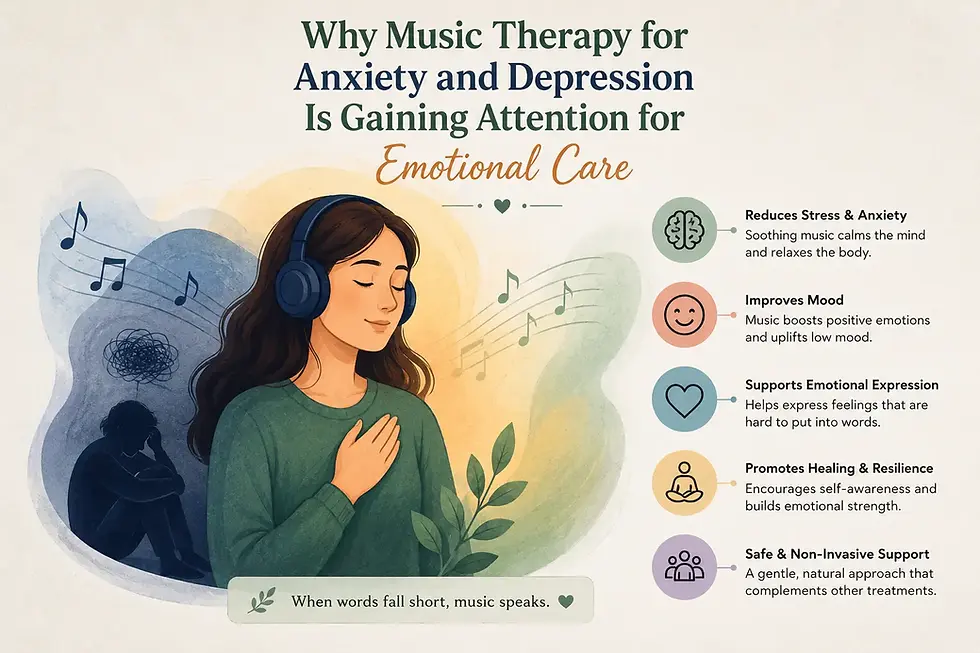
Anxiety usually leads to a state of being worried, nervous, restless, and frightened. In music therapy, the patient is usually relaxed through calming his or her nervous system and making him or her stop racing thoughts. Soft tones and soothing sounds make one's mind relaxed.
The following are some of the ways music therapy can assist in reducing anxiety:
Decreases Stress Hormone Levels
Soft music tends to decrease levels of cortisol, which is a stress hormone, hence leaving you feeling relaxed.
Enhances Breathing and Heart Rate
Soft music makes one have a slow rate of breathing as well as heartbeats, making one relaxed.
Improves Sleeping Patterns
Since anxiety affects one's sleeping patterns, soft music at night before going to bed can improve sleep patterns.
Encourages Emotional Comfort
Music tends to provide emotional comfort even when words fail to do so.
Music Therapy for Depression
The individual could end up experiencing emotional exhaustion, isolation, and a lack of control in his or her life. Listening to music will stimulate one's emotions and allow him or her to be associated with positive emotions.
Improves Moods Naturally
Listening to music triggers the production of brain chemicals like serotonin and dopamine that improve one's moods naturally.
Expression of Emotions
Individuals suffering from depression often find it difficult to express their emotions. Through music, one will be able to easily express his or her emotions, including feeling sad, frustrated, pain, and sorrow.
Fosters Connections
Music creates connections within its listeners since they get a feeling of being part of something and feel comfortable.
Improves Energy Levels
By listening to music, people are able to gain energy and motivation.
This is one reason why music therapy is recommended for anxiety and depression.
Why Choose Santosh Gahtpande for Music Therapy?
A famous name in the realm of holistic health and emotional well-being, Santosh Gahtpande uses her compassionate touch and expertise in the use of therapeutic sounds to help people achieve emotional balance using music.
The treatment process is carried out in such a way that it provides an atmosphere in which people get the chance to unwind, heal, and restore their inner peace, regardless of whether they are stressed, emotionally exhausted, suffer from anxiety or depression. One special feature about Santosh Gahtpande is her concern for gentle healing for the mind and soul.
Benefits of Music Therapy
In addition to its use for emotional healing, music therapy brings many more advantages including the following:
● Improving one’s ability to concentrate
● Increasing one’s awareness of his or her emotions
● Helping with meditation
● Reducing physical tension
● Increasing self-confidence
● Bringing peace to mind
Since music has a strong connection with human emotions, it becomes an effective medium of healing without any side effects.
Who Can Benefit from Music Therapy?
Music therapy is appropriate for all ages. It will assist in cases of:
● Stressed working professionals
● Academically stressed students
● Lonely elders
● Persons suffering from emotional trauma
● Persons undergoing anxiety or depression
● Those looking for a way to relax emotionally and mentally
The biggest advantage of music therapy in cases of anxiety and depression is that it is soothing and absolutely harmless.
Conclusion
This problem needs to be treated with the proper care, concern, and therapy. Healing isn't always possible, only with the help of tough treatment methods. Sometimes, the positive impact of music can play an important role in making someone undergo a change emotionally.
Music therapy for anxiety and depression can help relax, stabilise emotions, and treat one’s soul. Music therapy, with the help of Santosh Gahtpande, will allow everyone to feel the power of relaxation that comes from it.
Since now everyone is becoming more aware of the holistic approach to treating any ailment, music therapy can prove to be an effective way of getting back on track.


Comments