.png)


Why Indian Classical Music Therapy Is Gaining Recognition in Holistic Healthcare
- Jun 2
- 4 min read
Holistic healing has become a popular subject among many researchers over the past few years, especially with the focus on seeking natural methods for enhancing one’s physical, mental, and emotional wellbeing. There are different complementary treatments that have been discovered to heal various types of illnesses, but what really stands out is Indian classical music therapy.
There are many scientists who advocate for the use of Indian classical music therapy in holistic healing. For instance, Santosh Ghatpande has done a great job of enlightening many people regarding the health benefits associated with sound therapy. This healing method involves the application of raga to promote harmony within one’s body and mind.
Understanding Indian Classical Music Therapy
Indian Classical Music Therapy is a form of healing therapy where special ragas, rhythm, and melodic compositions play an important role in altering one's physical and mental well-being. As opposed to common music listening practices, therapeutic music experiences are specifically arranged depending on an individual's needs and emotions.
Indian Classical Music follows the concept of Nada Brahma, "the universe is sound." The concept believes that the vibrational frequency of sound is able to balance a person's energy field and positively affect the overall state of a person's health.
Various ragas are believed to produce various emotional reactions. Some ragas are used for alleviating stress and anxiety, whereas other ragas can promote relaxation or focus.
The Growing Need for Holistic Healthcare Solutions
The modern way of life can be responsible for stress, anxiety, insomnia, high blood pressure, and psychosomatic illnesses. While allopathic medicine will always play an important role, there is increasing awareness of complementary treatments, which help in addressing the causes of problems rather than treating just their symptoms.
The holistic treatment of mind, body, and soul is central to the concept of holistic medicine, and the trend towards integrative health has paved the way for the recognition of techniques like yoga, meditation, Ayurveda, and Indian classical music therapy.
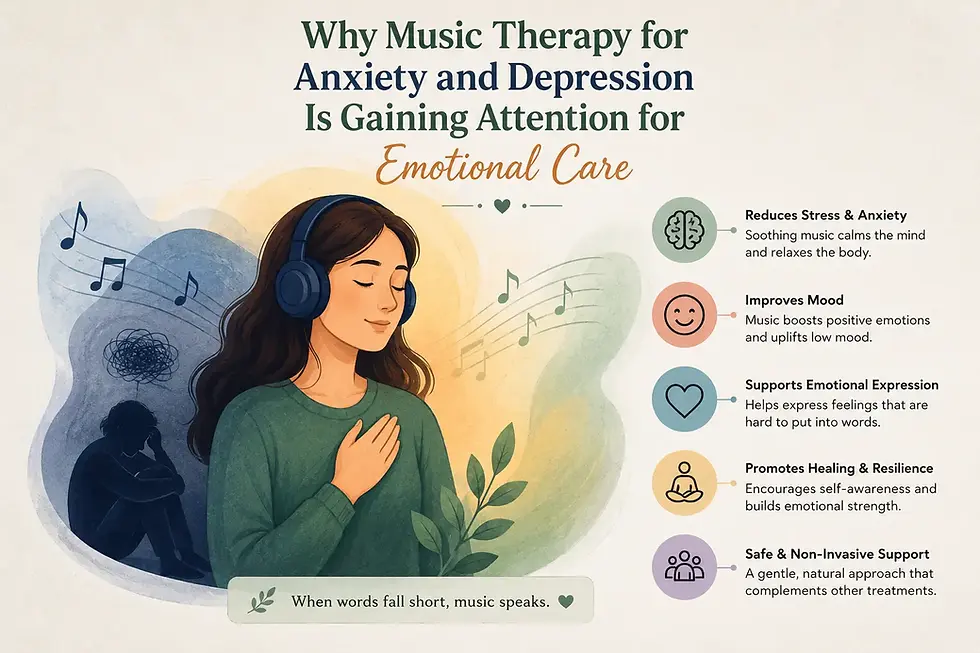
Music therapy, being noninvasive and drug-free, is one of the safest ways of attaining wellness.
Scientific Evidence Supporting Music Therapy
The rise in popularity of Indian classical music therapy is one of the main reasons because of scientific evidence showing its efficacy.
Scientific studies have proved that therapeutic music helps in:
● Reducing stress hormones
● Alleviating anxiety and depressive disorders
● Improving sleep quality
● Increasing cognitive functioning
● Facilitating emotional regulation
● Fostering relaxation and mindfulness
● Optimising heart rate and blood pressure control
The distinctive nature of Indian classical ragas, owing to their intricate tonal combinations and rich emotionality, allows for using such music for therapeutic purposes. Medical practitioners start understanding that certain sound frequencies can positively affect brain activities.
Mental Health Benefits of Indian Classical Music Therapy
Well-being of the mind has gained recognition worldwide and is increasingly considered an essential resource, and music therapy serves as an excellent asset in this respect.
Stress and Anxiety Reduction
Ragas that have been chosen properly tend to relax the nervous system, thus helping one to achieve mental relaxation.
Facilitates Emotional Recovery
Music has the ability to penetrate into emotional realms that may remain inaccessible through words, therefore being highly effective for people who go through some emotional experience like grief or trauma.
Improves Focus and Concentration
Some ragas help develop better focus and concentration.
Physical Health Benefits of Indian Classical Music Therapy
The benefits of music are not only linked to the mind, but physical benefits are seen too.
Improves Sleeping Patterns
As we all know, sleep problems are increasing because of stress and various other issues. Listening to therapeutic ragas in the evenings helps to improve sleeping patterns.
Heart Rate Regulation
Scientific research proves that soothing music regulates blood pressure and heart rate. Indian classical music is rhythmic and soothing in nature and hence, can promote physiological relaxation.
Pain Management
Music is used along with conventional therapies for the treatment of chronic pain conditions.
The Role of Santosh Ghatpande in Promoting Music Therapy
Santosh Ghatpande has been actively involved in emphasizing the curative value of Indian classical music. Thanks to his efforts through various performances, educational workshops, and consciousness-raising programs, the link between musical knowledge and modern wellness methods has been made.
It has been brought to light that Indian classical ragas could not only serve as an entertaining genre but also as instruments for achieving psychological harmony, intellectual well-being, and holistic restoration.
Combining With Contemporary Healthcare Systems
At present time, more and more healthcare facilities like hospitals, wellness clinics, rehabilitation centers, and therapists pay more attention to complementary treatment methods. In this regard, Indian classical music therapy easily complements other systems since it is:
● Non-invasive
● Budget-friendly
● Accessible to everyone regardless of age group
● Compatible with other treatment methods
● Completely safe without any negative drug effects
Quite often, music-based treatment is offered by healthcare professionals along with traditional medical approaches.
The Future of Indian Classical Music Therapy
Given the increased awareness and research studies in the field, the future of Indian classical music therapy looks promising and bright. There are more and more researchers and therapists who are interested in using Indian classical music therapy to help people manage stress, treat mental disorders, rehabilitate patients, practice geriatrics, and even practice preventive measures for good health.
The merger between the ancient musical art and modern healthcare science provides a great chance to offer healthy and sustainable well-being solutions.
Conclusion
The increasing significance of Indian classical music therapy in holistic healthcare can be attributed to the paradigm shift to integrative well-being solutions. Using sound and music as a tool to improve one’s emotional, mental, and physical health, Indian classical music therapy allows people to find balance and harmony.
Thanks to the vision of Indian classical music therapy experts like Santosh Ghatpande, Indian classical music therapy reaches more and more people looking for holistic solutions for their health issues.


Comments